


How to Prompt Fable 5 Correctly: A Practical Guide
Your feed is full of Fable 5 hacks right now. Run this prompt before the deadline. Capture its brain forever. Get Fable reasoning on a cheaper model in one paste.
Most of it is noise. Underneath the noise is a real skill worth learning: how to prompt a premium agentic model so it actually earns its cost.
Fable 5 is Anthropic’s high end Claude model. It is capable, it works for long stretches with better judgement, and it is expensive. Anthropic extended access on paid plans through July 19 and kept Claude Code weekly limits 50 percent higher for the window. That gives you time to learn the technique instead of chasing the hack.
This guide walks through six steps to prompt Fable 5 correctly. No jailbreaks, no “before it’s gone” urgency. Just the method that keeps working after the news cycle ends.
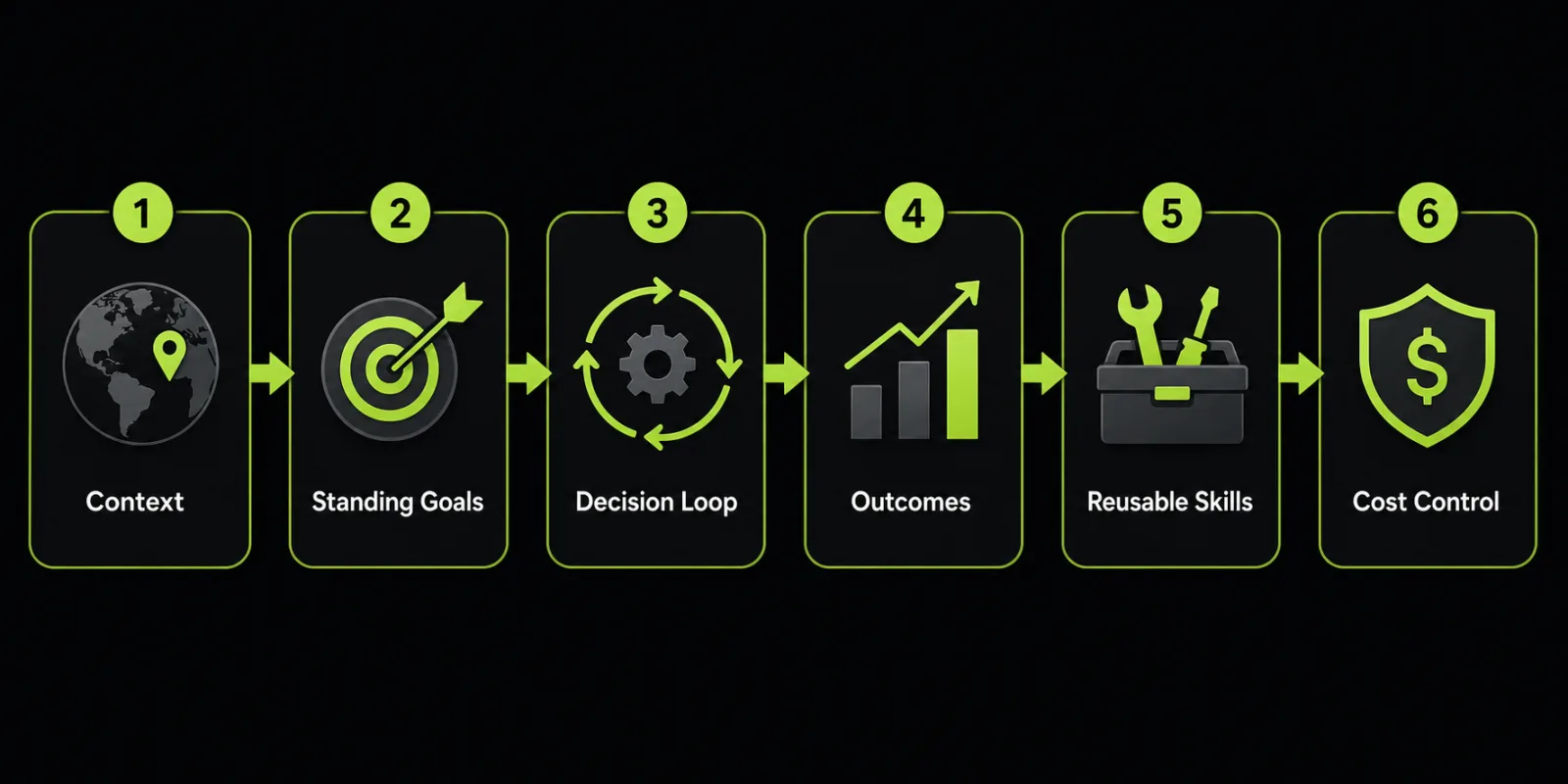
Step 1: Understand What You Are Actually Prompting
Fable 5 is not a chatbot you nudge one reply at a time. It is an agent that plans, acts across many steps, and makes judgement calls on your behalf. The way you prompt a fast, cheap model is the wrong way to prompt this one.
With a cheap model you iterate: ask, correct, ask again. With Fable 5 that pattern wastes its main strength and your money. The better mental model is delegation. You are briefing a capable operator once, then letting it run.
This is why “write this for me” prompts underperform. As one widely shared post put it, you bought a Ferrari and you are using it to deliver pizza. The fix is to give it a real brief and a real objective.
Step 2: Give It Persistent Context With CLAUDE.md
The single most repeated technique across every serious guide is the CLAUDE.md file. Claude reads this file before every prompt, so anything you put in it becomes standing context you never have to retype. We break down what to put in one in our guide to writing a CLAUDE.md file.
Put your identity, your goals, your constraints, and your definition of done here. Keep it short and concrete.
# About My Work

I run a small software and training business.
Core work: client tools, marketing content, internal automation.

# How I Want You to Work

- Plan before you act. Show the plan, then execute.
- When unsure, ask one clear question instead of guessing.
- Never delete or overwrite files without confirming first.
- Summarise what you changed in 2 to 3 sentences when done.

# Definition of Done

- Code runs and is committed.
- No leftover temporary files.
- A one line note on what to check next.
Each line is observable behaviour, not a wish. “Plan before you act” is testable. “Never overwrite without confirming” is a safety rule. This file is where correct prompting starts, because it shapes every interaction that follows.
Step 3: Set Standing Goals and a Decision Loop
Fable 5 works best when it knows what it is optimising for across the whole task, not just the current message. Community write ups map its agentic behaviour into a few named parts you can steer directly:
- A daily loop: the repeating cycle of plan, act, check, report.
- Standing goals: objectives that stay true across every step.
- A trust ledger: what it is allowed to do on its own versus what needs your sign off.
You do not need special syntax for this. You write it in plain language:
# Standing Goals

1. Ship working output, not drafts I have to finish.
2. Prefer the simplest change that solves the problem.
3. Keep me informed at each checkpoint.

# Autonomy

- Safe to do alone: read files, run tests, draft changes.
- Ask me first: deleting anything, installing packages, sending or publishing.
Now the model has a loop to follow and a boundary it will not cross. That is what turns a long autonomous run from risky into useful.
Step 4: Prompt for Outcomes, Not Tasks
This is the mindset shift that separates the top few percent of Fable 5 users from everyone else. Stop describing the step. Describe the result you want and let the model find the steps.
Task prompting (weak):
Write a function that reads the CSV, then another that filters it, then one that charts it.
Outcome prompting (strong):
I have a CSV of monthly sales in
data/sales.csv. Build me a small script that produces a clean chart of revenue by month, saved asreport.png. Handle missing rows sensibly. Show me your plan first.
The second version gives Fable 5 room to use its judgement, which is the thing you are paying a premium for. It plans, it handles edge cases, and it delivers a finished artefact instead of three fragments you have to assemble.
Step 5: Have Fable Write Reusable Skills
Here is the technique that survives even after Fable 5 becomes pay per use. Ask Fable 5 to write down how it does something well, as a reusable instruction file. Then cheaper models can follow those instructions later.
Prompt: You just solved this well. Write a reusable skill file that captures
exactly how to do this task: the steps, the checks, and the common mistakes to
avoid. Format it so a less capable model could follow it without you.
Save the result alongside your project. You are converting one expensive, high quality run into a repeatable asset. This is the honest version of the “keep Fable forever” idea going around. You are not smuggling a model out. You are capturing method, which is the part that actually transfers.
Step 6: Control Cost Deliberately
Fable 5 delivers the best output in its class, and it charges for it. One shared benchmark ran the same build task across models:
| Model | Tokens | Cost |
|---|---|---|
| Fable 5 | 62,158 | $3.12 |
| GPT 5.5 | 37,753 | $1.14 |
| Opus 4.8 | 22,280 | $0.56 |
| GLM 5.2 | 36,246 | $0.08 |
Fable produced the best result, at roughly six times the cost of Opus 4.8 on that task. That is not a reason to avoid it. It is a reason to aim it well.
Use Fable 5 for the hard, high judgement work: architecture, tricky debugging, first pass on something new and important. Once it has produced a good pattern or a reusable skill, run the repetitive follow up on a cheaper model. Match the model to the difficulty and the premium pays for itself.
Quick Reference
| Do | Instead of |
|---|---|
| Brief once, then delegate | Nudge reply by reply |
Put standing context in CLAUDE.md |
Retype your setup each time |
| State the outcome you want | List the individual steps |
| Set autonomy boundaries up front | Hope it asks before risky actions |
| Capture good runs as reusable skills | Re run expensive prompts from scratch |
| Reserve Fable 5 for hard work | Use it to deliver pizza |
The Takeaway
Prompting Fable 5 correctly is not about a secret prompt you paste before a deadline. It is delegation done well: clear context, standing goals, a decision loop, outcome framing, reusable skills, and deliberate cost control. Learn that once and it holds for every capable model that comes next.
New to running Claude agents this way? Start with our free hands on course, Your First 15 Minutes with Claude Cowork, which walks you through the basics step by step before you put these prompting habits to work.